
Diabetes: What It Is, Causes, Symptoms, Treatment & Types
NEM Health
February 17, 2026
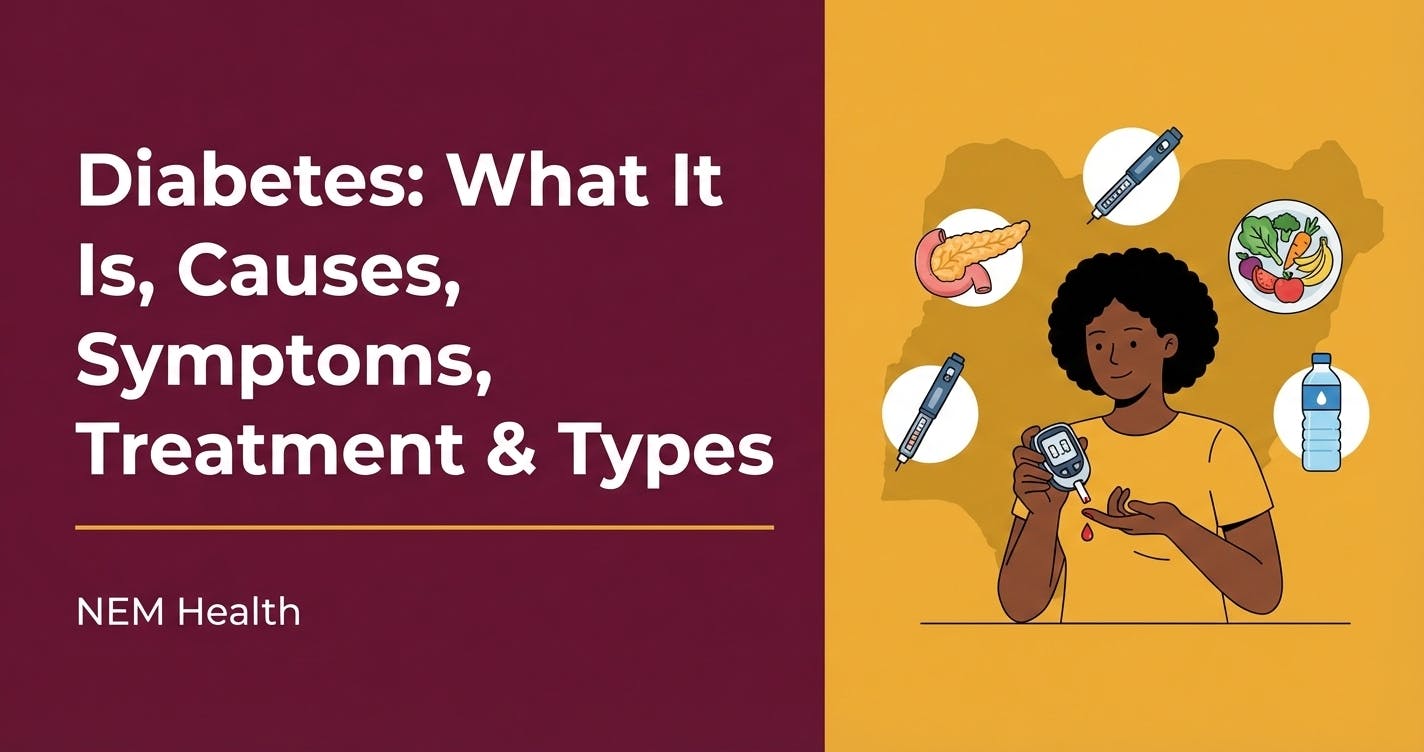
Diabetes is becoming one of Nigeria's fastest-growing health challenges, yet many people remain unaware they have it.
According to the International Diabetes Federation, 537 million adults worldwide lived with diabetes as of 2025. Even more concerning, diabetes cases in Nigeria have risen by 7% as of 2024, and many people don't even know they have it until serious complications develop.
Understanding diabetes, including what it is, its causes, symptoms, different types, and treatment options, empowers you to effectively manage your health.
This comprehensive guide provides everything you need to know about diabetes and how to manage or prevent this increasingly common condition.
What Is Diabetes?
Diabetes is a health condition that affects how your body converts food into energy. When you eat, your body breaks down most food into sugar (glucose) and releases it into your bloodstream. Normally, your pancreas releases insulin to help glucose enter your cells for energy.
With diabetes, your body either doesn't make enough insulin or can't use the insulin it makes effectively. This causes too much blood sugar to stay in your bloodstream, leading to serious health problems over time.
Types of Diabetes
Not all diabetes is the same. Understanding which type you have is important for proper treatment and management.
Type 1 Diabetes
This occurs when your pancreas produces little to no insulin due to an autoimmune reaction where the body attacks insulin-producing cells.
It usually develops in children and young adults, though it can appear at any age. This type cannot be prevented and accounts for about 5-10% of all diabetes cases.
Type 2 Diabetes
The most common form, accounting for 90-95% of all diabetes cases. With type 2 diabetes, your body can't use insulin properly (called insulin resistance). It typically develops in adults, but increasingly affects younger Nigerians due to lifestyle changes.
The encouraging news is that type 2 diabetes can often be prevented or delayed through healthy lifestyle choices.
Gestational Diabetes
This type develops during pregnancy in women who didn't previously have diabetes. It usually disappears after delivery, but it increases the risk of developing type 2 diabetes later.
Proper management during pregnancy is essential for both the mother's and the baby's health.
Prediabetes
This is a warning stage where blood sugar levels are higher than normal but not yet high enough to be diagnosed as diabetes. About 70% of people with prediabetes eventually develop type 2 diabetes, but lifestyle changes can reverse prediabetes and prevent progression to full diabetes.
What are the Causes and Risk Factors of Diabetes?
Causes of Type 1 Diabetes
- An autoimmune reaction where the body attacks insulin-producing cells in the pancreas
- Genetic factors (run in families)
- Exact trigger unknown and currently not preventable
Type 2 Diabetes and Prediabetes Risk Factors
- Obesity and excess weight
- Physical inactivity and a sedentary lifestyle
- Family history of diabetes
- Age (risk increases after 45, but younger Nigerians are increasingly affected)
- Poor diet high in sugar, refined carbs, and unhealthy fats
- High blood pressure and abnormal cholesterol levels
- Previous gestational diabetes
- Polycystic ovary syndrome (PCOS)
Gestational Diabetes Risk Factors
- Overweight before pregnancy
- Previous gestational diabetes
- Family history of type 2 diabetes
- Age over 25
- Polycystic ovary syndrome
In Nigeria, the shift from traditional diets rich in vegetables and whole grains to Western-style fast food has contributed significantly to rising type 2 diabetes rates. Urban lifestyles with less physical activity also play a major role in this diabetes epidemic
What are the Common Symptoms of Diabetes?
Early diabetes symptoms can be mild and easy to dismiss as "just stress" or "getting older." It’s essential to pay attention to your body, as early diagnosis of diabetes can prevent serious complications.
Also read: How to Manage Migraines and Other Common Headaches
Common Symptoms of Diabetes
- Increased thirst and frequent urination (especially at night)
- Extreme hunger even after eating
- Unexplained weight loss (more common in type 1)
- Fatigue and weakness that don't improve with rest
- Blurred vision that comes and goes
- Slow-healing cuts and wounds
- Frequent infections (skin, gum, or urinary tract)
- Numbness in hands or feet
- Darkened skin patches (acanthosis nigricans), often in the armpits or neck
Type 2 diabetes symptoms develop slowly over the years, which is why many Nigerians don't realize they have it until complications appear. Type 1 symptoms appear suddenly, often within weeks.
If you notice several of these symptoms, don't wait; get screened immediately at any hospital or diagnostic center.
Diagnosis and Treatment Options of Diabetes
Early diagnosis and proper treatment are essential for managing diabetes and preventing complications.
How Diabetes Is Diagnosed
- A1C Test: Shows average blood sugar over 2-3 months.
- Fasting Blood Sugar Test: Measures blood sugar after an 8-hour fast.
- Random Blood Sugar Test: You can get this test at any time, regardless of when you last ate; that is why it is termed “Random.”
- Oral Glucose Tolerance Test: Measures blood sugar before and 2 hours after drinking a sugary liquid
Essential Care for All Types of Diabetes
- Regular foot examinations to prevent neuropathy complications
- Annual comprehensive eye exams to prevent retinopathy and vision loss
- Kidney function monitoring through urine and blood tests
- Blood pressure and cholesterol management
- Diabetes education and ongoing support
- Healthy eating and regular physical activity
In Nigeria, diabetes treatment options are increasingly available through both public and private healthcare facilities. Always consult qualified healthcare professionals for personalized treatment plans rather than self-medicating.
Also read: How to Start Your Healthcare Journey with NEM Health
Prevention and Management Strategies for DIabetes
Type 2 diabetes and prediabetes can often be prevented or delayed with lifestyle changes. Even if you already have diabetes, these strategies help manage it effectively and prevent complications.
- Lose excess weight: Even 5-7% of your body weight loss significantly reduces diabetes risk
- Exercise regularly: Aim for 150 minutes weekly of brisk walking, dancing, swimming, or any activity you enjoy
- Eat healthier: Increase vegetables, beans, and whole grains while reducing refined sugar and processed foods
- Stay hydrated: Drink plenty of water instead of sugary soft drinks and juices
- Quit smoking: Smoking dramatically increases diabetes complications
- Manage stress: Chronic stress affects blood sugar levels through cortisol release
- Get adequate sleep: Poor sleep affects insulin sensitivity and blood sugar control
As a general rule, adults should screen for diabetes regularly; those with risk factors (family history, obesity, sedentary lifestyle) should screen more often, and pregnant women should be tested for gestational diabetes early enough in pregnancy.
What is the Best Way to Control Diabetes?
Whether you're at risk, newly diagnosed, or have been managing diabetes for years, remember that small, consistent changes make a significant difference in your health.
NEM Health offers comprehensive health insurance plans covering diabetes screening, regular monitoring, specialist consultations, and medications at over 2,500+ hospitals and 1,000+ pharmacies across Nigeria.
Schedule a diabetes screening if you haven't had one recently, especially if you have risk factors for the condition. Knowledge is power, and taking action today protects your health and future.
From routine A1C tests to endocrinologist visits, NEM Health's plans ensure you get consistent, quality care without the financial stress.
Explore our affordable coverage because your health journey deserves reliable support every step of the way.