
Heart Health for Nigerians: Why It Matters, Cardio Exercises & Benefits, and Local Diet Tips for Cardiovascular Health
NEM Health
March 20, 2026
Every single day, your heart beats over 100,000 times, pumping life through your body without you even thinking about it.
But how often do you care for it(your heart)?
The Nigerian Heart Foundation, in collaboration with other bodies, estimates that 76.2 million Nigerians are currently living with hypertension, many without even knowing it.
The silent nature of heart disease often makes it particularly dangerous because by the time the symptoms appear, significant damage may have already occurred. But the good thing is that heart health is largely within your control.
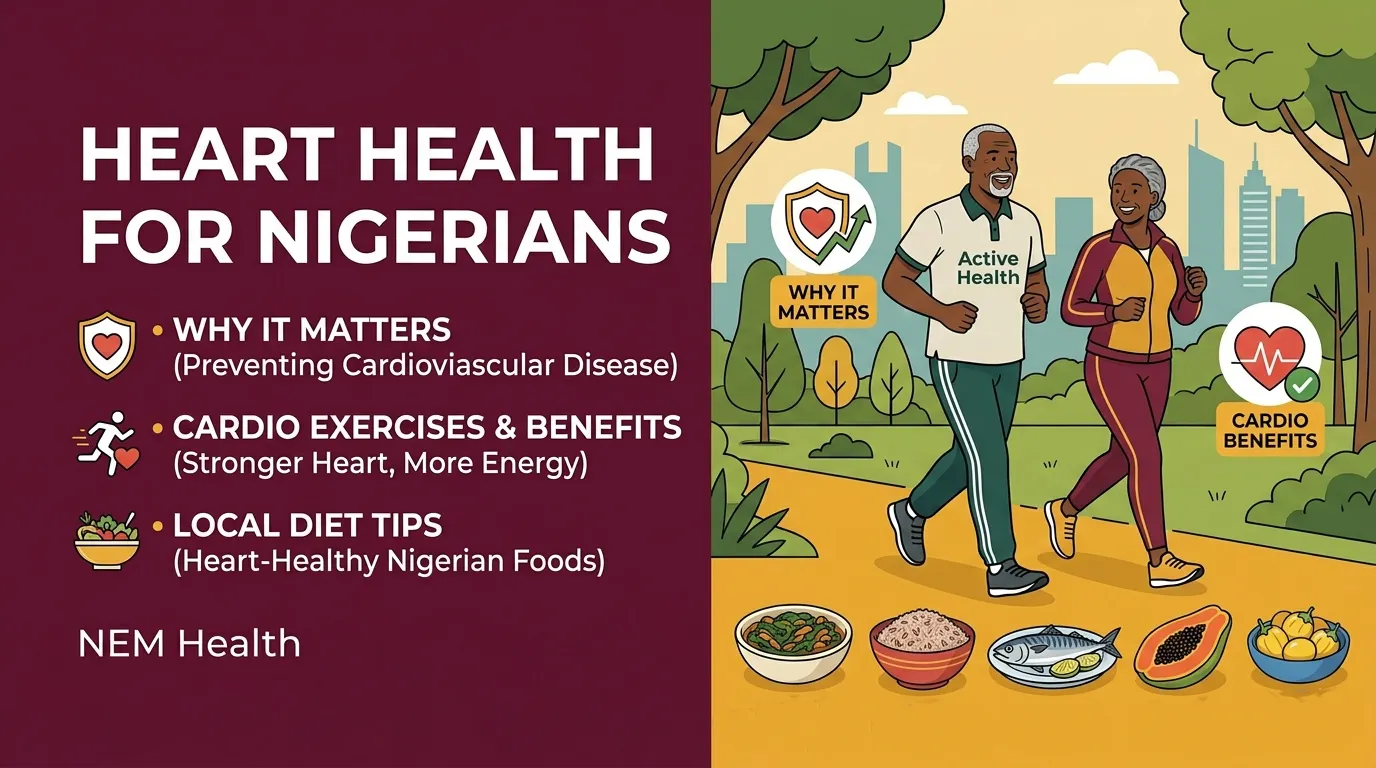
In this comprehensive guide, you will find why heart health matters specifically for Nigerians, helpful cardio exercises you can start today, local diet tips using foods from your nearby market, and actionable steps to care for your cardiovascular health.
Why is Heart Health so Important (Especially for Nigerians)?
Heart disease doesn't announce itself with some drumrolls; it creeps in silently through years of unhealthy habits, stress, and other factors. For Nigerians, several unique factors make cardiovascular health especially important to address. These include:
1. Rising CVD rates in Nigeria
This factor is associated with urbanisation, sedentary, remote and office jobs, increased consumption of processed foods, and high stress levels, which are driving heart disease rates upward across all age groups. What was once considered an "old person's disease" now affects Nigerians in their 30s and 40s.
2. Hypertension Epidemic
Nearly 1 in 6 Nigerian adults has high blood pressure, but research shows that over 50% don't know they have it. Hypertension, especially when not diagnosed early and not managed properly, silently damages your heart, kidneys, and blood vessels, leading to strokes, heart attacks, and kidney failure.
3. Stroke
Nigeria has one of the highest stroke rates in Africa. According to a report by the National Institute of Health, stroke is one of the leading causes of death in Nigerian teaching hospitals, accounting for 23% to 50%, with most cases linked to uncontrolled high blood pressure and poor cardiovascular health.
Also read: Why WHO Backs Preventive Care, And You Should Too
4. Economic Impact
The treatment of heart disease is expensive, which includes hospital admission, medications, procedures, and ongoing care, and can financially affect families. Prevention through living healthier costs far less than treatment and saves lives. Also, using health insurance services allows you to carry out periodic checks, seek specialist consultation, and, in cases where you’ve been diagnosed, manage it at a relatively lower cost due to your health coverage.
5. Preventable nature
According to the World Health Organisation, most cardiovascular diseases are preventable through changes in lifestyle and by addressing some behavioural and environmental factors. This includes your daily choices about food, exercise, and stress management, which directly affect your heart health.
Top Cardio Exercises for Nigerians & Benefits
Cardiovascular exercises are great because they strengthen your heart muscle, improve blood circulation, lower blood pressure, and reduce the risk of heart disease.
The good thing is that effective cardio doesn't require expensive gym memberships or equipment. Here are a few you can start with:
1. Taking a Walk/Stroll
This is one of the most accessible exercises. You can walk 30-45 minutes daily at a pace. Walking to the market instead of driving, taking stairs instead of elevators, or walking around your neighbourhood in the early morning or evening when it's cooler are significantly helpful. Research shows 150 minutes of moderate walking weekly can reduce heart disease risk by 30-40%.
2. Dancing
The Nigerian music makes this the most enjoyable cardio you can engage in. You can dance to Afrobeats, Highlife, or any music that gets you moving for 20-30 minutes. Dancing burns calories, lowers blood pressure, reduces stress, and improves mood, which are all beneficial for heart health.
3. Skipping Rope
This is an inexpensive, highly effective cardio workout. You can skip rope for 10-15 minutes (can be broken into 2-3-minute intervals with rest breaks). This improves cardiovascular endurance, burns significant calories, and can be done in small spaces at home
Also read: How to Manage Migraines and Other Common Headaches
4. Swimming
If you have access to pools or beaches, swimming provides excellent low-impact cardio that's easy on joints while giving your heart a great workout. You can swim 20-30 minutes 2-3 times weekly for better cardiovascular health benefits.
5. Cycling
Whether on stationary bikes or regular bicycles, cycling strengthens the heart without stressing joints. You can cycle for 30-45 minutes several times weekly for a healthier heart.
Key Benefits of Cardio Exercises
Basically, regular aerobic exercises:
- Lowers blood pressure
- Reduces LDL (bad) cholesterol
- Helps manage weight and diabetes risk
- Improves sleep quality
- Reduces stress hormones
- Strengthens your heart muscle, enabling it to pump blood more efficiently with less effort.
If you're new to exercise, start slowly, like 10 minutes daily, then gradually increase the duration and intensity as you progress. But most importantly, consistency matters more than intensity for heart health.
Local Diet Tips for Cardiovascular Health
Your daily food choices significantly impact your heart health. Fortunately, Nigerian markets offer an abundance of heart-healthy foods at affordable prices. Here is a list:
1. Leafy Vegetables (Ugu, Waterleaf, Spinach)
These vegetables are rich in nitrates that lower blood pressure, potassium, and antioxidants that protect blood vessels. You can add them generously to all your soups and stews.
2. Fatty Fish (Mackerel/Titus, Sardines)
Fatty fish is loaded with omega-3 fatty acids that reduce inflammation, lower triglycerides, and prevent irregular heartbeats. It’s advisable to eat fish 2-3 times weekly.
3. Beans and Legumes
Beans and legumes are excellent sources of soluble fibre that removes cholesterol, plant protein without saturated fat, and minerals that support heart function.
4. Whole Grains (Brown Rice, Oats, Millet, Sorghum)
Whole grains add fibre that lowers cholesterol, vitamins B for heart health, and sustained energy without spiking blood sugar. You can replace white rice with brown rice or make oatmeal.
Find a more detailed list of heart-healthy Nigerian foods in our comprehensive guide: 19 Incredibly Heart-Healthy Foods to Reduce the Risk of Cardiovascular Diseases.
Foods to Limit to Reduce the Risk of Cardiovascular Diseases
- Reduce salt intake (most Nigerians consume 2-3 times the recommended amount)
- Limit fried foods
- Reduce the use of excessive palm oil
- Minimise processed meats (sausages, hot dogs)
- Reduce sugary drinks and excessive alcohol
- Cut back on refined carbohydrates (white bread, white rice, pastries).
In meals, consider using more spices and less salt for flavour, grill or bake instead of deep-frying, choose water or fresh juice over soft drinks, and opt for whole grains over refined grains whenever possible.
Healthier Lifestyle Tips for Better Heart Health
Beyond exercise and diet, other lifestyle factors significantly impact cardiovascular health for Nigerians.
Stress Management
Chronic stress from traffic, work pressure, and financial worries raises blood pressure and can affect one's heart health. You can practice deep breathing exercises, take short breaks during work, prioritise adequate sleep (7-8 hours nightly), make time for activities you enjoy, and consider prayer or meditation for stress relief.
Regular Monitoring
It’s important to get your blood pressure checked regularly, check cholesterol levels periodically as well, monitor your blood sugar, especially if overweight or with a family history of diabetes, and track weight regularly to catch concerning trends early. This is easier and more cost-friendly when you have health insurance.
Avoid Tobacco
Smoking significantly increases the risk of heart disease and stroke. If you smoke, quitting is the single best thing you can do for your heart. Seek support from healthcare providers who can help with cessation programs.
Also read: Protect Your Vision: Living Well with Glaucoma
Limit Alcohol
Excessive drinking raises blood pressure and contributes to heart disease. If you drink, do so moderately and occasionally, if possible.
Stay Hydrated
Proper hydration supports heart function and blood circulation. Drink adequate water daily, especially in Nigeria's hot climate.
Take Action with NEM Health
Protecting your heart health requires both prevention and regular medical monitoring. This is where having reliable healthcare support is important.
NEM Health enrollees enjoy comprehensive cardiovascular care, including regular blood pressure and cholesterol screenings at over 2,500+ hospitals and 1000+ pharmacies nationwide, access to cardiologists and specialist consultations when needed, and preventive care that spots problems before they become emergencies.
Don't wait until chest pain or a health crisis forces you to take heart health seriously. Prevention is always better and far less expensive than treatment.
Start with the exercise and diet tips in this guide, and ensure you have regular medical checkups to monitor your heart health progress.
NEM Health offers affordable health insurance plans with comprehensive coverage for heart health monitoring, screenings, and treatment.