
19 Incredibly Nigerian Heart-Healthy Foods to Reduce the Risk of Cardiovascular Diseases
NEM Health
March 9, 2026
Your heart is working every second of every day to keep you alive, yet cardiovascular disease remains one of the leading causes of death in Nigeria.
According to the American Heart Association Journals, cardiovascular diseases account for nearly 10% of all deaths in the country, with hypertension affecting 30% of Nigerian adults.
The alarming truth is that many of these deaths are preventable through simple lifestyle changes, particularly what we eat. The foods you choose daily either protect your heart or put it at risk.
The good thing is that Nigeria's markets are filled with affordable, delicious, heart-healthy foods that can significantly reduce your cardiovascular risk.
This guide shows you 19 incredibly heart-healthy foods, many already part of Nigerian cuisine, that science proves protect your heart, lower cholesterol, reduce blood pressure, and help you live healthier.
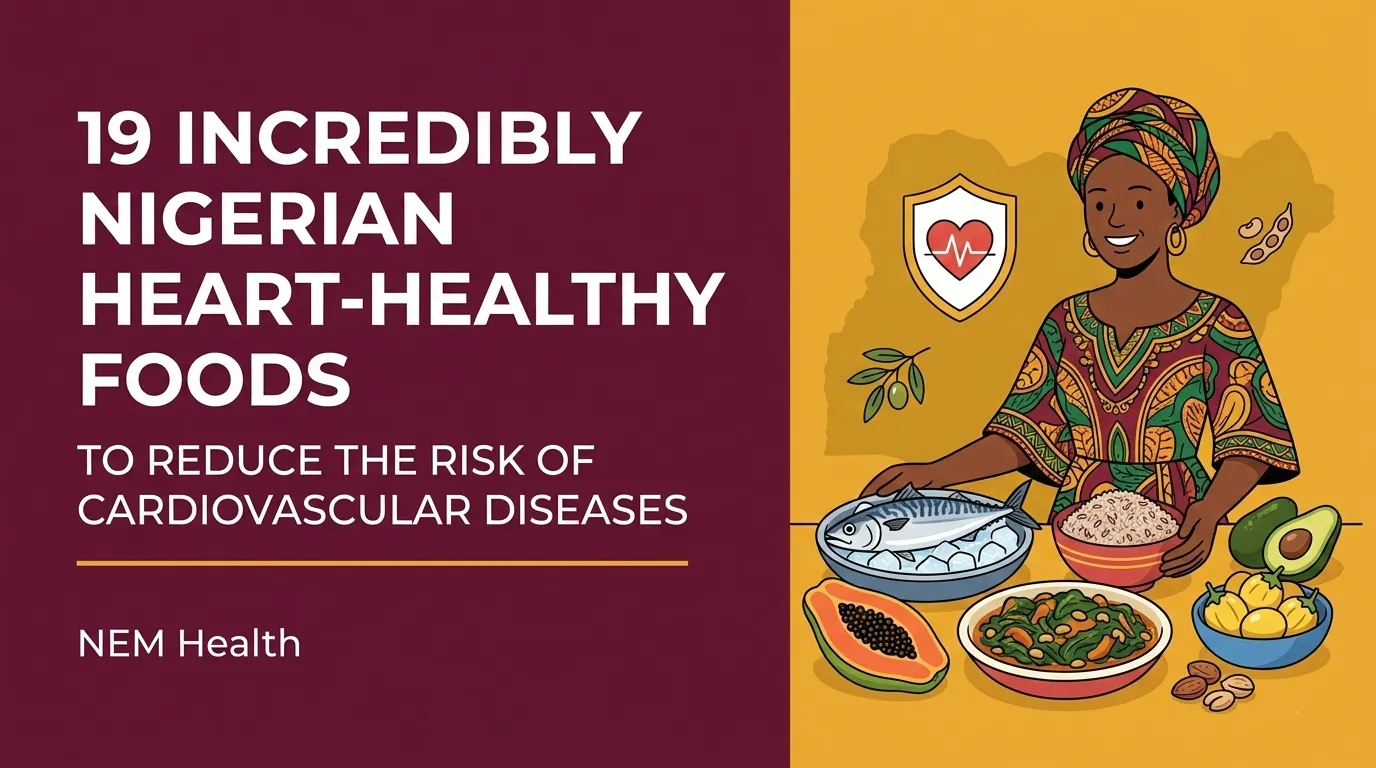
19 Incredibly Nigerian Heart-Healthy Foods
1. Ugu (Fluted Pumpkin) Leaves
Ugu is a Nigerian food packed with heart-protective vitamins and nitrates that naturally lower blood pressure.
It is rich in potassium, vitamin C, and folate. Ugu helps regulate blood pressure and reduce inflammation. You can add ugu to soups, blend it into smoothies, or eat it as a vegetable side dish.
2. Oats and Oatmeal
Oats contain beta-glucan, a soluble fibre that reduces LDL (bad) cholesterol by up to 10% according to research. This fibre binds to cholesterol in your digestive system and prevents its absorption. You can start your day with oatmeal sweetened with honey instead of sugar, or add oats to smoothies for a heart-healthy breakfast.
3. Mackerel (Titus Fish)
Mackerel is rich in omega-3 fatty acids (EPA and DHA) that significantly reduce heart disease risk according to the American Heart Association. These healthy fats lower triglycerides, reduce inflammation, and prevent dangerous heart rhythms. You can enjoy grilled, smoked, or in stews. You can find mackerel in Nigerian markets.
4. Almonds and Nuts
Almonds provide vitamin E, antioxidants and healthy fats that lower bad cholesterol. Studies show that eating a handful of nuts daily reduces cardiovascular disease risk significantly. While imported almonds can be expensive, groundnuts (peanuts) offer similar benefits at friendly prices. Snack on unsalted nuts or add to breakfast meals.
Research reviewed by Harvard Health and the American Heart Association (AHA) shows that regular nut consumption is associated with a 20% to 30% lower risk of heart disease.
5. Waterleaf (Talinum triangulare)
Another Nigerian leafy green powerhouse is waterleaf. It is loaded with omega-3 fatty acids, magnesium, and potassium for controlling blood pressure. It's affordable and available in markets. You can use waterleaf in soups, stews, or eat it as a vegetable side dish.
Also read: How to Manage Migraines and Other Common Headaches
6. Garlic
Garlic contains allicin, a compound that lowers blood pressure and cholesterol levels naturally. Regular garlic consumption can help reduce blood pressure in hypertensive individuals, but you must consult your doctor for guidance and the recommended amount you can consume. You can add fresh crushed garlic to soups, stews, and sauces.
7. Beans and Legumes
Beans (black-eyed peas, brown beans) are rich in soluble fibre that reduces LDL cholesterol and stabilises blood sugar. They're protein-packed, affordable, and filling. You can enjoy bean porridge (ewa agoyin), moi-moi, or akara regularly. Eating beans helps reduce cardiovascular risk.
8. Sweet Potatoes
Sweet potatoes provide beta-carotene antioxidants and potassium for blood pressure regulation. Their natural sweetness satisfies cravings without spiking blood sugar dangerously. You can boil, roast, or steam sweet potatoes instead of frying for better heart benefits. They're affordable and available year-round in Nigerian markets.
9. Tomatoes
Tomatoes are packed with lycopene, an antioxidant that reduces oxidation of LDL cholesterol and prevents arterial plaque buildup. Cooked tomatoes (in stews) actually provide more lycopene than raw ones. Tomato stews are already heart-healthy; just reduce the oil and salt content.
Also read: Why WHO Backs Preventive Care, And You Should Too
10. Bitter Leaf (Vernonia amygdalina)
Bitter leaf contains great antioxidants and potassium that support healthy blood pressure. Despite its bitter taste, it's incredibly beneficial for cardiovascular health. You can use it in soups or drink bitter leaf juice diluted with water. Individuals report improved blood pressure after regularly consuming bitter leaf, but it is important to consult a doctor for better advice on regulated consumption.
You can always seek a doctor’s advice using the NEM Health telemedicine service on the mobile app.
11. Oranges and Citrus Fruits
Oranges provide vitamin C, fibre, and flavonoids that strengthen blood vessels and reduce inflammation. The soluble fibre pectin helps lower cholesterol levels. It’s advised to eat whole oranges rather than juice to get the fibre benefits.
12. Avocado (Pear)
Avocados are rich in monounsaturated fats that raise good HDL cholesterol while lowering bad LDL. They're also packed with potassium for blood pressure control. While pricier than some foods, one avocado provides multiple servings. You can add it to salads or eat it with whole-grain bread.
13. Garden Eggs (African Eggplant)
Garden eggs contain soluble fibre and antioxidants that support cardiovascular health. They're low in calories, filling, and help control cholesterol. It's best to enjoy raw as a snack with groundnut paste, or cooked in stews or soups.
Also read: Affordable Family Health Plans in Nigeria: Things You Should Know
14. Fatty Fish (Salmon, Sardines)
Beyond mackerel, other fatty fish provide omega-3 fatty acids important for the regulation of heart rhythm and the reduction of inflammation.
15. Plantain (Unripe)
Unripe plantain is rich in resistant starch and potassium that support heart health. Unlike ripe plantain, which is high in sugar, unripe plantain helps control blood sugar and blood pressure. You can boil unripe plantain instead of frying it, or cook it along with beans for healthier benefits.
16. Scent Leaf (Nchuanwu)
Scent leaf provides essential oils with anti-inflammatory properties that protect the heart. It is rich in vitamins and minerals. This aromatic herb adds flavour to meals with rich health benefits. You can use fresh scent leaves in soups, stews, and pepper soups.
17. Ginger
Ginger contains gingerol compounds with powerful anti-inflammatory and antioxidant effects that protect blood vessels. It helps reduce cholesterol and prevent blood clotting. You can add fresh ginger to your teas, soups, juice, and stews for enhanced cardiovascular health.
18. Dark Leafy Vegetables (Spinach, Broccoli, etc)
Spinach and similar greens provide nitrates that convert to nitric oxide, relaxing blood vessels and lowering blood pressure naturally. They're packed with vitamins, minerals, and antioxidants. Include generous portions of leafy greens in at least two meals daily.
19. Whole Grains (Brown Rice, Millet)
Whole grains contain fibre, B vitamins, and minerals that reduce the risk of cardiovascular disease. Unlike refined grains, they maintain nutrient-rich bran and germ. You can replace white rice with brown rice, ofada rice, or millet gradually for heart-healthy meals.
Start Protecting Your Heart
These 19 heart-healthy foods prove that protecting your cardiovascular health doesn't require expensive imported superfoods or complicated diets.
The Nigerian markets are filled with affordable, delicious options that science confirms reduce the risk of heart disease. The key is to include some of these foods in your daily meals consistently. But ensure you reduce salt and unhealthy fats.
While eating these 19 heart-healthy foods is a great investment for a long, healthier life, diet is only one part of the puzzle. Regular checkups are vital.
NEM Health makes this easy with an extensive network of 2,500+ hospitals and 1,000+ pharmacies, and also a telemedicine service.
From specialist consultations to heart screenings and blood pressure monitoring, NEM Health's affordable plans ensure you aren't paying out-of-pocket for critical care. Available plans include:
- The Individual/Family plan
- The Goldencare plan for older parents/senior citizens
- The Corporate or SME plans
- The HomeReach Plan, sponsored by individuals in diaspora for their loved ones back in Nigeria