
9 Benefits of Boosting Your Brain Power (Through Active Habits)& Why Brain Health Matters
NEM Health
July 23, 2026
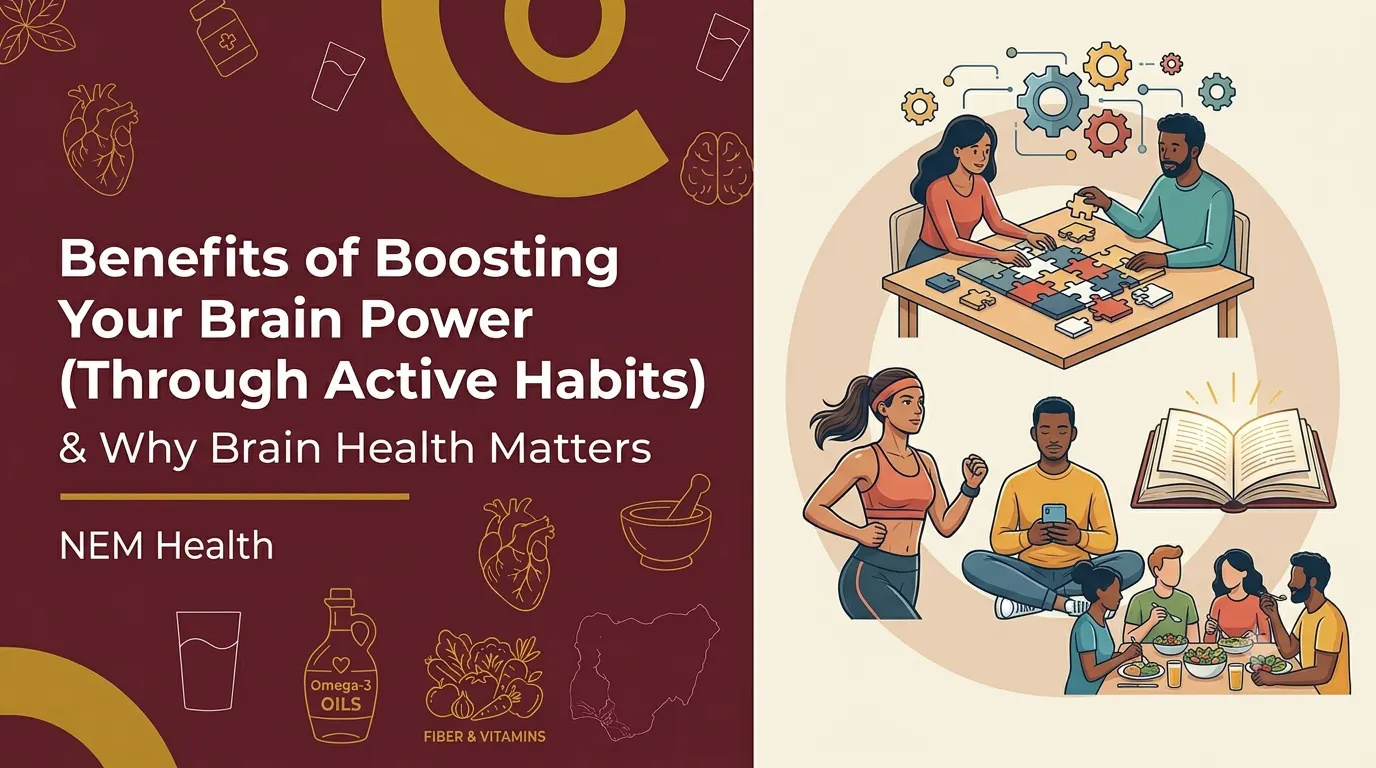
Imagine your brain as the CEO of your life.
When the CEO is tired or disorganised, the whole company suffers. Yet most people invest more time maintaining their cars than protecting their brain health.
The research published in The Lancet shows that up to 40% of dementia cases worldwide can be prevented or delayed through lifestyle modifications. That's nearly half of all dementia cases, preventable through choices you make every day about exercise, diet, sleep, social connection, and mental stimulation.
Regardless of your age (24 or 61), investing in your brain health today pays massive dividends tomorrow. This article shares 9 science-backed benefits of boosting your brain power and why prioritising brain health matters more than ever in our fast-paced, stress-filled society.
9 Benefits of Boosting Your Brain Power
1. Sharper Memory and Faster Learning
If you want to remember names better, learn new skills faster, and recall information effortlessly, then this is for you. Enhancing your brain power significantly enhances memory and learning capacity.
This can be achieved through exercise, which increases BDNF (brain-derived neurotrophic factor), a protein that promotes the growth of new brain cells and strengthens connections between neurons.
According to Harvard Medical School, regular aerobic exercise can boost BDNF levels significantly, directly improving memory formation. Physical activity also increases hippocampal volume, the brain region necessary for memory, even in adults previously thought incapable of growing new brain cells.
Another way is through mental stimulation, which strengthens neural pathways through learning new languages, playing musical instruments, solving puzzles, or mastering new skills. The more you challenge your brain, the stronger and more efficient these memory networks become.
2. Reduced Risk of Dementia
One of the most compelling reasons to prioritise your brain health is that you can significantly reduce your risk of dementia through your lifestyle choices.
The landmark Lancet Commission report identified 12 modifiable risk factors that together account for 40% of dementia cases. These include physical inactivity, smoking, excessive alcohol, poor diet, social isolation, less education, hearing loss, depression, air pollution, head injury, hypertension, and diabetes. Addressing even a few of these factors lowers your risk.
Diets rich in vegetables, fish, nuts, and olive oil reduce cognitive decline by up to 35%, according to research published in PMC journals. Regular exercise, social engagement, and mental stimulation provide additional protective benefits.
3. Better Mood and Depression Prevention
Your brain's health directly impacts your emotional well-being, and boosting it naturally enhances your mood and protects against depression.
Exercise has been shown to trigger the release of endorphins, your brain's natural "feel-good" chemicals. It also increases serotonin and norepinephrine levels, neurotransmitters that regulate mood. Studies show that regular physical activity reduces depression risk by 30% and alleviates symptoms in those already experiencing depression.
You can also engage in cognitive stimulation through hobbies, learning, and social interaction, because it provides purpose and a sense of liveliness, both of which are important for mental health. Social connections specifically protect against depression, according to the WHO’s research, which links social isolation to increased dementia and depression risk.
4. Improved Focus and Concentration
In our distraction-filled societies, it’s often a struggle to be focused; brain-boosting habits can help improve your concentration and attention span.
To start with, the least effort, physical activity increases blood flow to your brain, delivering more oxygen and nutrients to areas responsible for attention and executive function. This improved circulation helps you focus better and think more clearly.
When you practice focused attention through meditation, deep work sessions, or challenging mental tasks, it strengthens neuroplasticity. This helps your brain rewire to sustain attention longer and resist distraction better.
5. It Slows Cognitive Ageing
You can't stop ageing, but you can slow cognitive decline significantly through brain-healthy habits. This is because your lifestyle factors affect telomeres, the protective caps on chromosomes that shorten with age. Exercise, stress management, and a healthy diet preserve telomere length, slowing biological ageing, including brain ageing.
You can build your cognitive reserve through education, mentally stimulating careers, hobbies, and continuous learning, which creates extra neural connections. This reserve allows your brain to compensate better when some cells die naturally with age, maintaining function longer, according to Alzheimer's Association research.
6. Enhanced Creativity and Problem-Solving
Want to think more creatively and solve problems more effectively? Boosting brain power unlocks innovative thinking.
Habits such as exercise and mental stimulation can create new neural pathways and strengthen connections between different regions of the brain. This increased connectivity allows your brain to make essential associations, which is the foundation of creative thinking.
Also, reduced stress through physical activity and relaxation can quiet the analytical mind, allowing creative insights to surface because many breakthrough ideas surface when the conscious mind relaxes.
Anytime you are stuck on a problem, take a walk or engage in physical activity. The movement often triggers creative solutions that eluded you at your desk.
7. Better Quality of Sleep and Brain Detoxification
Quality sleep is when your brain performs essential maintenance, and brain-boosting habits improve sleep, which further enhances brain health. During deep sleep, your brain's waste removal system (glymphatic system) clears toxic proteins, including beta-amyloid, the protein that accumulates in Alzheimer's disease. Better sleep basically means better detoxification for you.
Also, during sleep, your brain processes and stores information learned during the day. Poor sleep impairs this consolidation, affecting learning and memory, according to Harvard sleep research.
8. It Reduces the Risk of Stroke and Vascular Brain Health
Many brain-boosting habits significantly reduce the risk of stroke. After Alzheimer's, vascular dementia (caused by reduced blood flow to the brain), Stroke is the second most common types of dementia.
Controlling blood pressure, cholesterol, and blood sugar through exercise, diet, and medication when needed prevents the small strokes and vessel damage that cause vascular dementia.
Maintaining healthy blood pressure through regular exercise, reduced sodium intake, stress management, and maintaining a healthy weight protects brain blood vessels. High blood pressure damages delicate brain vessels over time, increasing both stroke and dementia risk.
It’s important to know your blood pressure and cholesterol numbers, and it’s elevated, seek the counsel of a healthcare provider to provide you with the needed guidance on the changes you need to make in your lifestyle and medication if needed. With a NEM Health HMO subscription, you can even consult a doctor using the telemedicine service in the mobile app.
9. Longer, Healthier Lifespan
The ultimate benefit of brain-healthy habits is to add years to your life and life to your years. According to WHO research, brain-boosting lifestyle habits don't just extend lifespan; they increase health span (years lived in good health). The research also shows that addressing dementia risk factors can add 5-7 quality years to life expectancy.
Aside from these habits boosting your brain power, exercise, healthy eating, social connection, and stress management also protect your heart, immune system, metabolism, and bones. You're not just investing in your brain; you're investing in whole-body vitality.
Conclusion
Your brain's future depends on the choices you make today. The encouraging truth is that it's never too early or too late to start protecting your cognitive health. Be it at the age of 25 or 75, implementing even a few brain-boosting habits yields measurable benefits.
You can start small, but start today: take a daily 30-minute walk, add more vegetables and fish to meals, prioritise 7-8 hours of sleep, stay socially connected, keep learning new things, manage stress through relaxation practices, protect your cardiovascular health, and get regular cognitive assessments to track brain health over time.