

5 Health Benefits of Walnuts and How Much You Should Eat
NEM Health
July 30, 2026
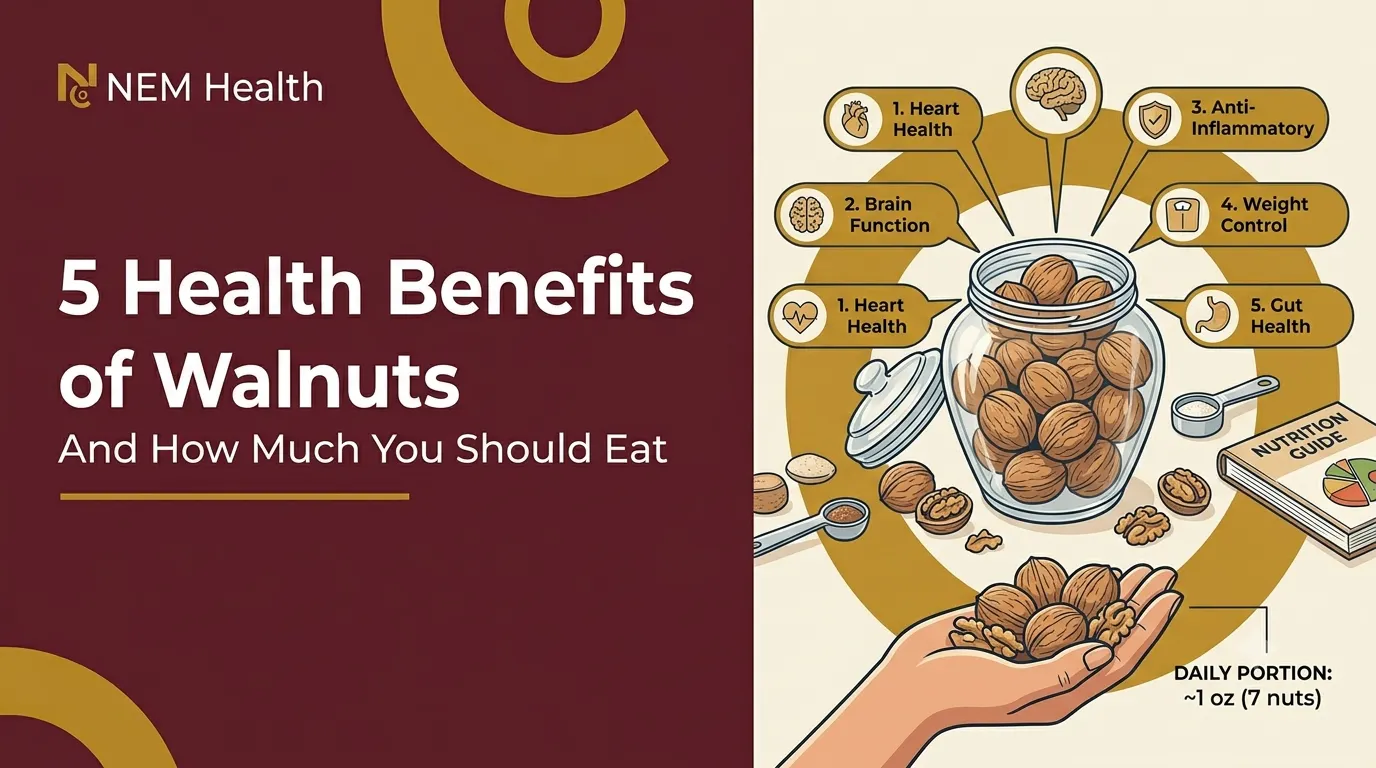
Have you ever noticed how a walnut looks exactly like a tiny brain? Nature might be trying to say something with that.
Walnuts are among the most nutrient-dense nuts you can eat, packed with healthy fats, fibre, protein, and antioxidants.
Research consistently links them to better heart health, sharper thinking, and even a happier gut. So, what exactly makes these wrinkly nuts so special?
In this article, we will discuss 5 health benefits of walnuts and the simple answer to how many walnuts you should eat daily.
Health Benefits of Walnuts
1. Walnuts Support a Healthier Heart
Heart disease is one of Nigeria's fastest-growing health challenges, and your diet plays a massive role in either protecting or damaging your cardiovascular system. Walnuts are one of the most heart-healthy nuts you can eat.
Walnuts are rich in alpha-linolenic acid (ALA), a plant-based omega-3 fatty acid that reduces inflammation in blood vessels and supports healthy circulation.
Research published on Mendeley about a meta-analysis of 49 randomised controlled trials found that walnut consumption significantly reduced total cholesterol, LDL ("bad") cholesterol, and triglycerides. Studies also highlight that walnuts can lower LDL cholesterol by approximately 9-16% and reduce diastolic blood pressure by about 2-3 mm Hg.
One of the easiest ways to replace unhealthy snacks with a small portion of walnuts daily is a simple, realistic step toward better heart health.
2. Walnuts Boost Brain Health and Cognitive Function
Your brain is about 60% fat, and the type of fat you consume directly affects how well it functions. Walnuts are uniquely shaped like a brain, and fittingly, they're one of the best foods for brain health.
Walnuts contain ALA omega-3 fatty acids, polyphenols, and vitamin E, all of which are nutrients that protect brain cells from oxidative damage and support healthy cognitive function. Research has shown that regular walnut consumption leads to improvements in memory, processing speed, and mental flexibility, particularly as we age.
For Nigerians dealing with high-stress workdays and demanding schedules, walnuts offer a simple, natural way to support mental clarity and focus
3. Walnuts Reduce Inflammation and Deliver Powerful Antioxidants
Chronic inflammation is sometimes one of the silent drivers behind many serious diseases, including heart disease, diabetes, and cancer. Walnuts are one of the richest plant-based sources of antioxidants available.
Walnuts contain polyphenols, particularly ellagitannins, which gut bacteria convert into compounds with potent anti-inflammatory effects. According to a review published on NIH/PMC, regular walnut consumption is associated with reduced markers of inflammation. This makes walnuts a protective food against several chronic diseases simultaneously.
Adding walnuts to your diet isn't just about one benefit; it's about reducing the underlying inflammation that fuels multiple diseases at once.
4. Walnuts Support Gut Health and Weight Management
A healthy gut is the foundation of overall wellness, and walnuts offer benefits for your digestive system and weight management goals.
The fibre in walnuts (approximately 2g per ounce per USDA FoodData Central) feeds beneficial gut bacteria, promoting a diverse and healthy microbiome. Research shows that people who eat walnuts regularly have higher levels of beneficial gut bacteria linked to reduced inflammation and better metabolic health.
Despite being calorie-dense, walnuts promote satiety(the feeling of fullness and the suppression of hunger after eating), keeping you fuller for longer, which supports healthy weight management by reducing your overall calorie intake.
You can eat walnuts as a mid-morning or afternoon snack instead of processed foods to stay full, feed your gut, and manage weight more effectively.
5. Walnuts Help Support Blood Sugar and Metabolic Health
With diabetes rates rising rapidly in Nigeria, foods that support healthy blood sugar levels deserve serious attention. Walnuts are a smart addition to a metabolic-health-focused diet.
Despite containing fats and calories, walnuts have a low glycemic impact and don't cause blood sugar spikes. The combination of healthy unsaturated fats, protein, and fibre in walnuts helps stabilise blood sugar levels and improve insulin sensitivity over time.
Walnuts are not a cure for diabetes, but they are a genuinely supportive food for metabolic health when eaten as part of a balanced diet. Always contact your doctor or dietician before changing your diet. With the NEM Health mobile app, you can easily consult a doctor without visiting a hospital facility.
How Many Walnuts Should You Eat Daily?
This is a very important question most people have, and the answer is simple.
The recommended daily serving is one ounce (approximately 28 grams), which equals about 7 whole walnuts or 14 walnut halves. According to USDA FoodData Central, this serving provides approximately 185-190 calories, 18g of healthy fats, 4g of protein, and 2g of fibre.
Simple ways to eat walnuts in Nigeria:
- Sprinkle over oatmeal in the morning
- Add to fruit salads or yoghurt
- Blend into smoothies
- Eat a small handful as a standalone snack between meals
- Mix into homemade granola
It’s best to stick to one ounce daily because more isn't necessarily better, and walnuts are calorie-dense enough that larger portions can add up quickly. If you have a nut allergy, avoid walnuts entirely and consult your doctor for alternatives.
Start Snacking Smarter Today
Walnuts are one of those rare foods where the science and the taste actually agree. In this article, we discussed five significant benefits: heart protection, brain support, reduced inflammation, gut health, and blood sugar stability, all packed into a single small daily handful of walnuts.
You don't need to overhaul your entire diet. Start by replacing one unhealthy snack daily with a portion of walnuts and build from there.