
7 Physical Activities/Execises to Boost Brain Health in Nigeria
NEM Health
September 8, 2026
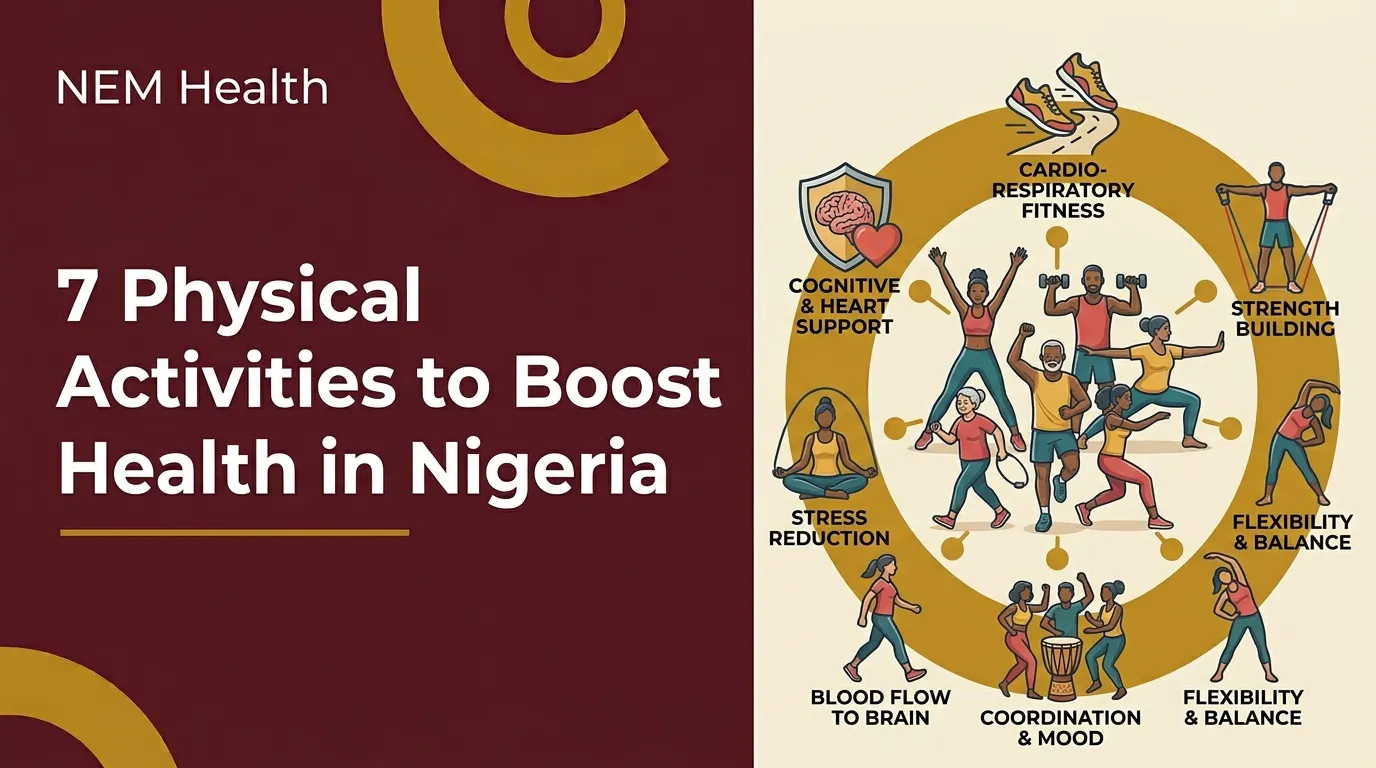
Your brain needs movement just as much as your muscles do. Regular physical activity is associated with better memory, sharper focus, improved mood, and healthier ageing, according to WHO physical activity guidelines.
Research also suggests it may help reduce the risk of cognitive decline over time. And the good news is that you do not need an expensive gym or a complicated fitness plan.
Here are seven physical activities that can support brain health, accessible, affordable, and suited to everyday Nigerian lifestyle.
Physical Activities/Execises to Boost Brain Health
1. Brisk Walking/Strolling
Brisk walking, commonly called “strolling”, is one of the most accessible exercises available to Nigerians. A review on NIH/PMC found that regular aerobic activity, including walking, is associated with better cognitive function in older adults.
You can walk to nearby destinations, around your compound, or through safe neighbourhoods in the early morning or evening. Aim for 20-30 minutes most days. If you are just starting, even 10 minutes daily is a meaningful beginning.
2. Dancing
Dancing is exercise you can genuinely enjoy. It combines aerobic activity with coordination and social engagement, all of which may support cognitive function according to research published on PubMed. Put on Afrobeats, Highlife, or any Nigerian music you love and dance freely at home, at social events, or with friends and family. Beginners can start with 10-15 minutes of light dancing and build from there.
3. Skipping Rope
Skipping rope is vigorous, affordable, and requires very little space. It raises your heart rate quickly, improving blood circulation throughout the body, including the brain.
It’s advisable to use suitable footwear and a flat, clear surface. Start with short intervals: 30 seconds of skipping followed by 30 seconds of rest, and gradually increase over time. People with joint problems, balance difficulties, or heart conditions should consult a doctor before starting
4. Cycling
Cycling is a low-impact aerobic activity that can support cardiovascular and brain health. Where roads, traffic, and personal safety permit, cycling to work or around your neighbourhood is a practical daily option.
A stationary bicycle at home or in a gym is a good alternative if outdoor cycling is not safe or accessible. Begin with 15-20 minutes at a comfortable pace and increase gradually. Always prioritise safety on the road.
5. Jogging or Light Running
Jogging is associated with improved aerobic fitness, which research links to better cognitive function per PubMed.
If you have not jogged in a while, begin by alternating two minutes of walking with one minute of light jogging, then gradually increase the jogging portion over several weeks. Avoid sudden increases in intensity, particularly if you have been inactive for some time, and always pay attention to how your body responds.
6. Bodyweight and Resistance Exercises
You do not need a gym to build strength. Sit-to-stand movements, wall push-ups, chair squats, and light resistance exercises all support muscle function, mobility, and blood circulation, all of which contribute to brain and body health.
These are especially important for healthy ageing, as maintaining strength helps preserve independence and reduces the risk of falls. Start with 2-3 sets of 8-10 repetitions for each movement and progress only when they feel comfortable.
7. Balance, Mobility, and Mind-Body Exercises
Activities that combine movement with focus, such as stretching routines, controlled balance drills, yoga, or tai chi, can support coordination, mental calm, and physical stability.
These are particularly valuable for older adults or anyone recovering from illness or injury. If you are at risk of falling or have limited mobility, practise near a wall or a durable surface, and consider working with a physiotherapist for personalised guidance.
How to Build a Brain-Healthy Exercise Routine
The WHO recommends that adults aim for at least 150 minutes of moderate-intensity physical activity each week. You do not need to achieve this immediately.
Start with what you can manage, choose activities you enjoy, and build consistency over time. Combine movement with quality sleep, nutritious food, social connection, and regular health checks for broader brain and body benefit. Rest when needed and never ignore pain or unusual symptoms during exercise.
Movement is medicine, especially for your brain. Whether you begin with a 10-minute walk, a short dance session, or a few bodyweight exercises at home, the key is consistency. Small steps done regularly can contribute meaningfully to better focus, mood, and cognitive health over time. If you would like support accessing preventive care or routine health checks, NEM Health offers affordable plans across Nigeria, including telemedicine and access to 2,000 hospitals.
Safety note: If you have heart disease, severe hypertension, major mobility limitations, pregnancy-related concerns, or any other medical condition, please speak with a healthcare professional before beginning vigorous exercise. Exercise supports general health but does not replace professional diagnosis or treatment.